Font Size:

The Northwest’s hydroelectric dams provide carbon-free, low-cost power to communities across the region. Originally constructed as part of President Franklin D. Roosevelt’s New Deal, these dams brought fair access to electricity to rural areas, paving the way for cooperatives and not-for-profit utilities. Since then, their impact has extended far beyond FDR’s original vision, benefiting the Northwest in countless ways.
As the demand for carbon-free energy and climate-friendly policies grows, hydroelectric power remains the backbone of the Northwest’s energy supply. Currently, hydropower accounts for roughly half of the region’s annual electricity generation—enough to power Seattle’s energy needs 16 times over. And it has the capacity to produce even more.
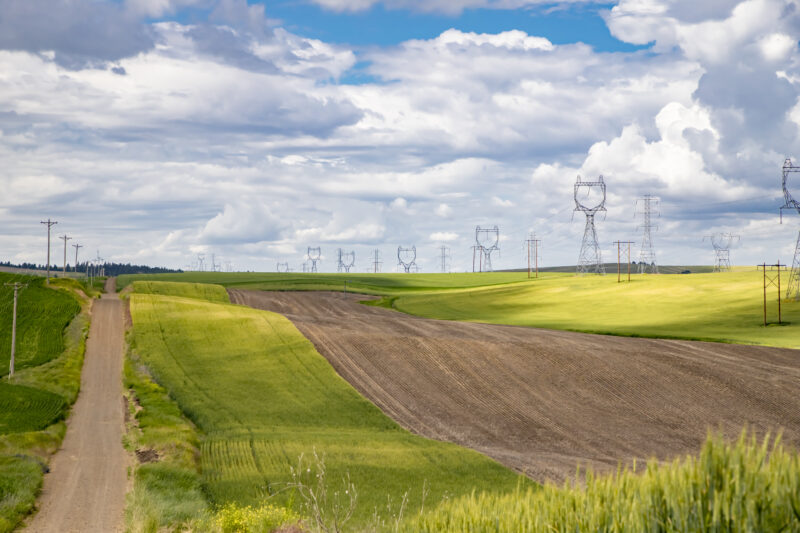
One of the greatest strengths of hydropower is its ability to support solar and wind energy, which have fluctuating electricity output. Hydroelectric dams act as a natural energy storage system by holding water when solar and wind power are abundant and releasing it when more electricity is needed.
In this way, hydropower functions like a giant, clean battery, stabilizing the grid and ensuring a steady power supply for homes and businesses.
Beyond providing clean power, hydropower is one of the most affordable energy sources available. Its lower costs are essential for families and individuals who depend on accessible, reliable electricity to maintain a comfortable home without financial strain.
These low costs also allow utilities to offer incentives and assistance programs for those in need, further strengthening communities.
Hydropower isn’t just good for households—it’s good for business too. Companies like Boeing, Norpac Paper, Amazon, Microsoft, and Google have all established operations in the Northwest to take advantage of clean, low-cost energy. Their investments contribute to job creation and economic growth throughout the region.
Hydroelectric dams are vital to local communities along the Columbia and Snake Rivers and their tributaries, offering benefits beyond electricity production:
Flood Protection: Dams help prevent catastrophic floods, safeguarding homes and lives.
Irrigation & Water Supply: In drier regions, dams provide essential irrigation for farmers and secure drinking water for local communities.
Sustainable Agriculture: Using just 6% of the Columbia River’s annual runoff, an additional 7.8 million acres of farmland have become productive, fueling the region’s agricultural economy.
Low-Carbon Transportation: Crops and goods produced by Northwest farms are transported via river barges, a far more efficient and low-emission alternative to rail and trucking.
Altogether, the Columbia River Basin (PDF) supports over $24 billion in annual trade, driving economic opportunity across the region.
The benefits of our hydropower system are irreplaceable. As climate change and water access challenges grow, the role of hydropower in securing clean, affordable, and reliable energy will only become more critical.
Hydropower is not just the past—it’s the future