Hydro 101
The Basics of Hydroelectric Dams
Hydropower has existed for a long, long time. Before there were hydroelectric dams. People harnessed the energy from flowing water to turn water wheels to power basic machinery. With the introduction of electricity, people applied this same concept to spinning turbines to generate energy, and the hydroelectric dam was born.
How Does a Hydroelectric Dam Work?
Hydroelectric dams harness the power of moving water to generate electricity. This process involves several key steps:

A dam is built across a river to block its natural flow, forming a reservoir or pool of water. This stored water serves as the energy source for hydroelectric power.
2
Releasing Water to Generate Energy
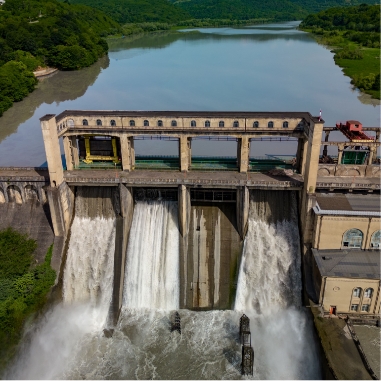
When electricity is needed, water from the reservoir is released through tunnels or pipes, directing it toward turbine blades. The force of the flowing water pushes the turbines, making them spin, similar to how a revolving door turns when pushed.
3
Converting Motion into Electricity
Inside each turbine, copper wire is wrapped around a rotating component. As the turbine spins within large stationary magnets, an electric current is generated. This electricity is then transmitted through power lines for use in homes and businesses.
4
Returning Water to the River
After passing through the turbines, the water exits through another pipe and flows back into the river, continuing its natural course
5
Managing Water Flow: Spills and Storage
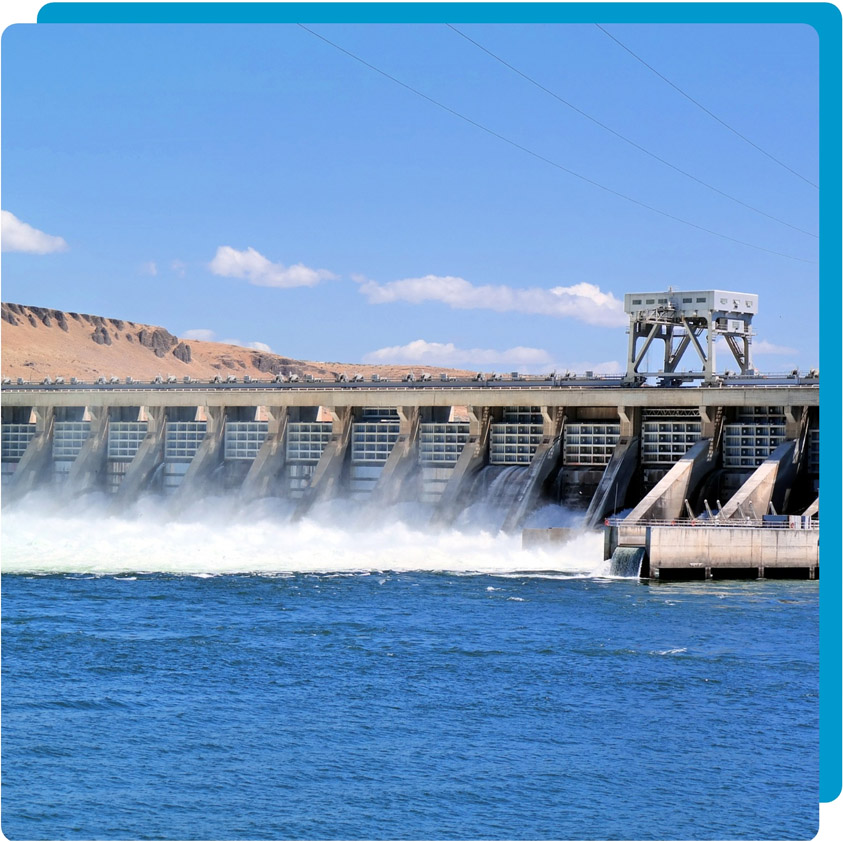
Not all river water flows through the dam’s turbines. In some cases, water is spilled, meaning it bypasses the dam and flows downstream without generating electricity. Spills occur for various reasons, such as:
- Preventing excessive water buildup in the reservoir
- Managing river levels and preventing flooding
- Helping migrating fish, like salmon, safely pass through the river system without encountering turbines
The amount of water stored or spilled depends on factors such as water level, temperature, and flow rate. Managing these elements is essential to balancing energy production, environmental health, and community needs.
Hydropower by the Numbers
0
Megawatts of generating capacity of Northwest hydroelectric dams
The yearly average output of megawatts by Northwest hydroelectric dams.
of the Northwest’s renewable, carbon-free annual electricity production
0
of the Northwest’s maximum generating capacity.
0
Carbon emmissions generated by hydropower production
0
U.S. Households Served by the Northwest’s Hydroelectric Output in an Average Year
What Are the Advantages of Hydroelectric Dams?
Perhaps the greatest advantage of hydroelectricity is its simplicity—it relies on gravity and the natural flow of water to generate energy. This process creates no pollution, making hydropower a clean energy source.
Hydropower is highly efficient, capable of delivering massive amounts of electricity when installed on larger rivers. Unlike most energy sources, hydropower’s fuel—water—can be reused as it moves from one dam to the next, improving renewability while keeping costs low.
Another key advantage is the ability to store energy for later use. By controlling water flow, dams can release or hold water to generate more or less electricity, functioning similarly to a giant battery. This stabilizes the electrical grid and complements other renewable energy sources.
Beyond energy production, hydroelectric dams provide greater control over rivers, benefiting both commercial and recreational activities.
– They enhance navigation for ships and barges transporting valuable goods.
– They create reservoirs for boating, fishing, and swimming, fostering recreation and tourism.
– Dams also play a critical role in flood control, protecting nearby communities from dangerous floods.
Together, these advantages help create thriving, sustainable communities near hydroelectric dams.
To learn more, visit our Hydropower Essentials page.
Hydropower Fast Facts
There are many privately owned dams in addition to the federal hydroelectric dams. They are operated by private and customer-owned utilities.
Northwest hydropower produces no carbon emissions, thereby significantly reducing the total carbon footprint of the region’s energy production.
The Columbia River is the largest in the Pacific Northwest, and its largest tributary is the Snake River. Combined, they stretch across the United States and Canada, from the Rocky Mountains to the Pacific Ocean.
The federal dams on the Columbia and Snake Rivers are operated by the U.S. Army Corps of Engineers and the Bureau of Reclamation. Bonneville Power Administration markets the power produced by the dams to Northwest utilities and beyond.
Join Our Fight
Hydroelectricity is a critical, carbon-free, resource to fighting climate change.