Font Size:

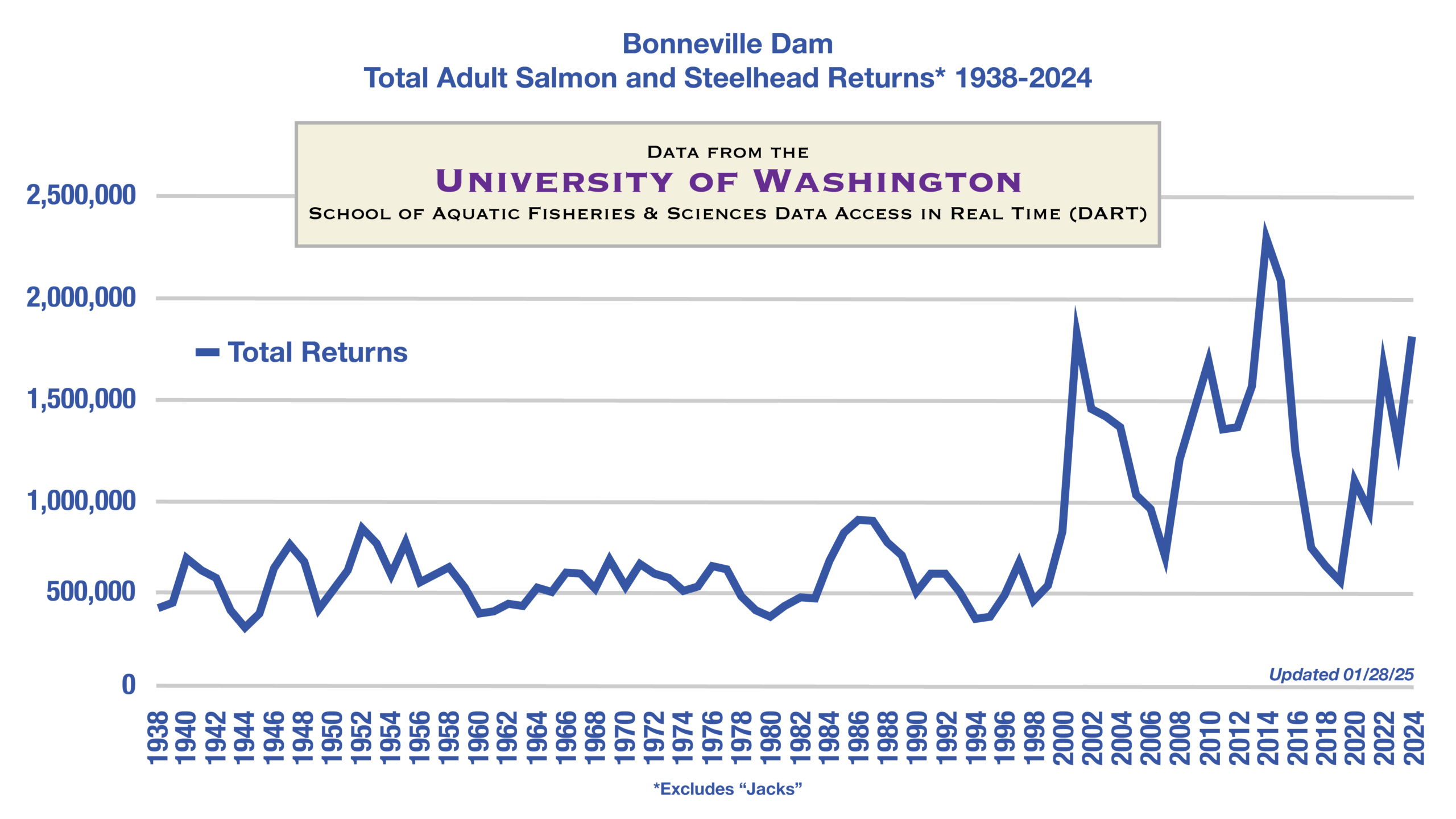
Since the first federal dam on the Columbia River went into operation in 1938, adult salmon and steelhead returns have tripled. Fish counts from dams throughout the Columbia River basin compiled by the University of Washington’s Data Access in Real Time (DART) tell an important story.
Salmon are a keystone species in our region. Before the first federal dam on the Columbia River was completed in 1938, their numbers had already been reduced to a fraction of their historic levels.
Bonneville Power Administration customers and non-federal hydropower operators have invested billions in fish and wildlife protection investments. Those funds have supported:
These investments have led to major improvements in juvenile salmon survival. Today, fish passage at many projects is highly effective, with survival rates at, near, or above 96% past each dam for juvenile salmon and steelhead.
Innovative solutions like fish ladders, turbine bypass systems, and spillway weirs help guide juvenile salmon safely downstream. New fish-friendly turbines, with safer blades, reduce the risk of injury and improve energy efficiency.
Hydropower-funded programs do more than make improvements to the dams themselves. The commitment to healthy rivers has made the following projects possible:
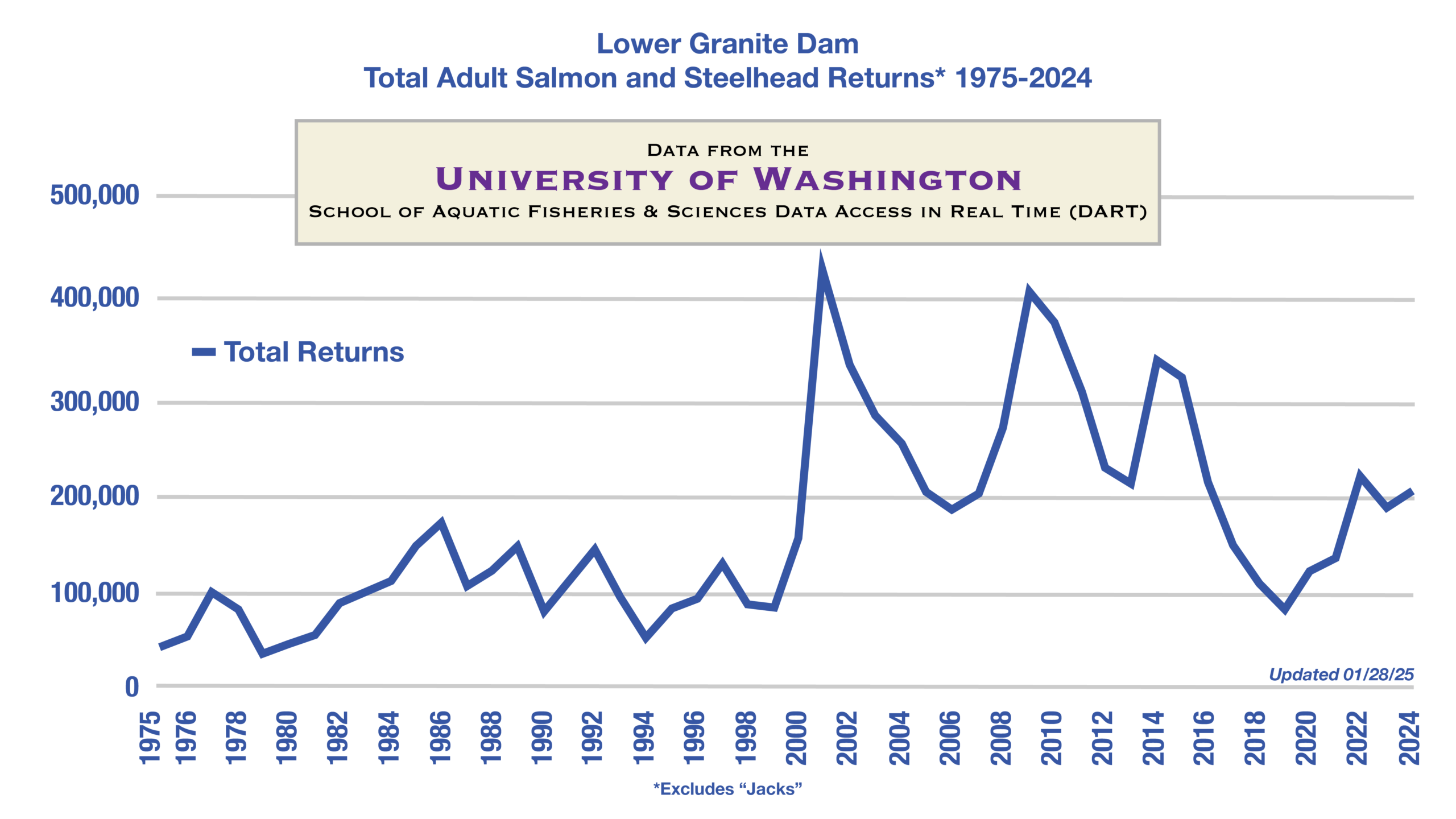
Specific populations of salmon and steelhead native to the Snake River–the largest tributary to the Columbia–are among those listed as threatened or endangered. Yet, overall numbers are improving. In total, adult returns of salmon and steelhead above Lower Granite dam, the furthest upriver of the four lower Snake River dams, are roughly four times higher than in 1975 when Lower Granite went into operation.
There are still many challenges to address, though. According to NOAA Fisheries, “the largest changes in temperature and flow affecting Snake River sockeye would occur in the free-flowing section of the Salmon River. That area is upstream of the Columbia and lower Snake River’s federal dams. That means that changing the operation of the hydrosystem would not solve the problem, the scientists wrote.”
Unlike reservoirs, which hold more water and typically heat more slowly, free-flowing rivers can experience dangerously low water levels and extreme temperatures in late summer.
Despite these efforts, salmon still face an existential challenge: climate change. Warmer, acidifying oceans are disrupting predator-prey dynamics and reducing salmon survival worldwide.
A 2021 NOAA report found that, “results indicate that as one symptom of a changing ocean, rising SST (sea surface temperature) puts all of our study populations at high risk of extinction, despite actions within the hydrosystem to speed juvenile travel and increase in-river survival.”
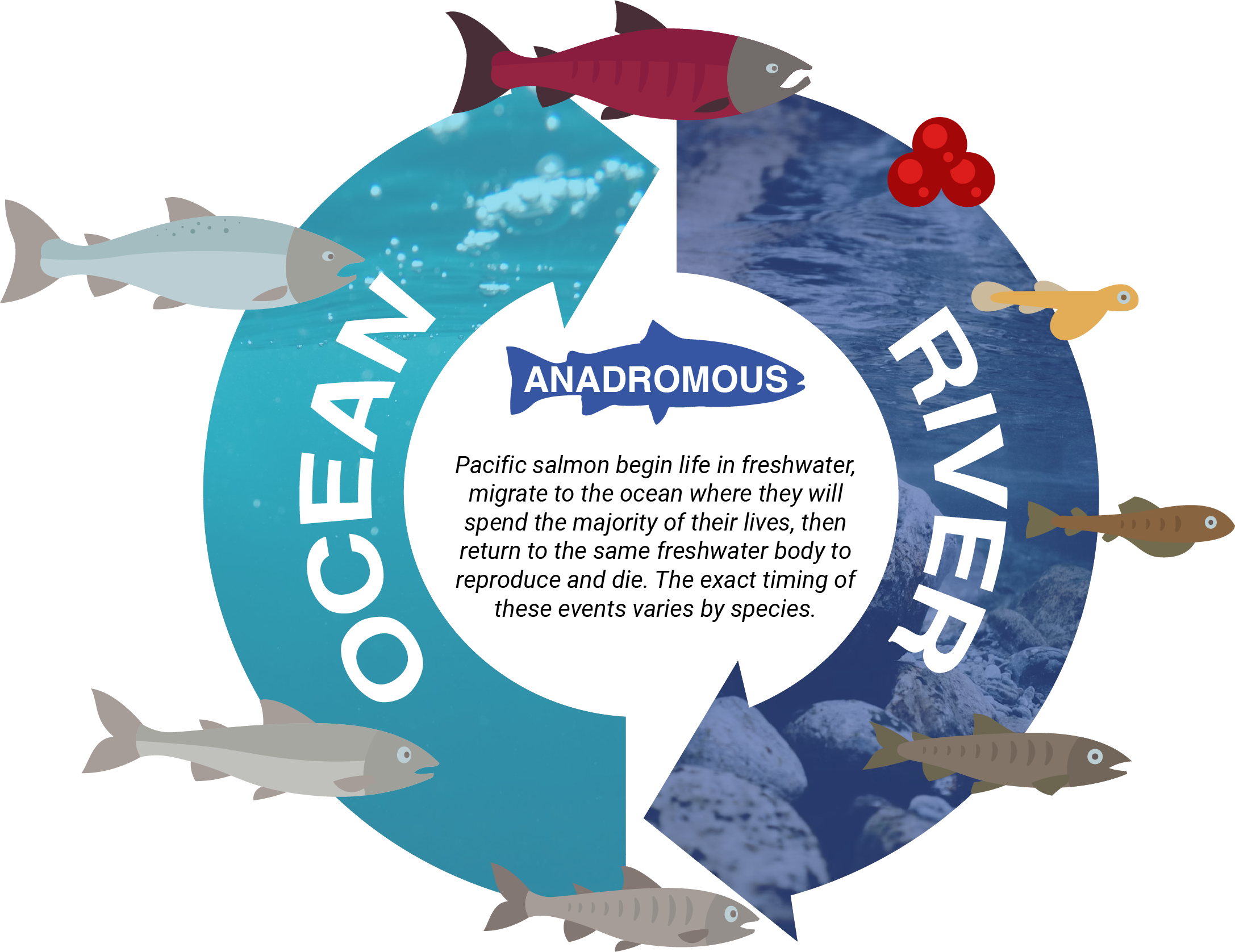
Simply put, salmon recovery efforts on rivers alone cannot reverse salmon declines if ocean conditions continue to deteriorate.
Hydropower is a carbon-free energy source that provides between 80 to 85% of the Northwest’s renewable energy. It plays a crucial role in integrating other renewable sources like wind and solar. Reducing carbon emissions is critical to slowing climate change, which is necessary to improve ocean conditions for salmon and steelhead.